I get asked this question probably every other week. “Do I actually need to register for VAT, or can I wait?” And honestly, the confusion is fair. The rules sound simple on paper, but the details around thresholds, deadlines, and what counts as taxable turnover trip up even experienced business owners. So let’s go through this properly, the way I’d explain it to a client sitting across from me.
What VAT Registration Actually Means
VAT Registration in the UAE is the process of getting your business officially recognized by the Federal Tax Authority as a taxable person, meaning you’re now legally required to charge VAT on your taxable supplies, file returns, and remit whatever you collect. Once registered, you’re issued a Tax Registration Number, which appears on your invoices and identifies your business in every FTA filing going forward.
It sounds administrative, and in some ways it is, but the consequences of getting it wrong, whether that’s registering late or not registering at all when you should have, are genuinely serious. Penalties for non-compliance in the UAE aren’t small.
Who Must Register for VAT in the UAE
This is really the core question everyone actually wants answered, so let me lay it out clearly.
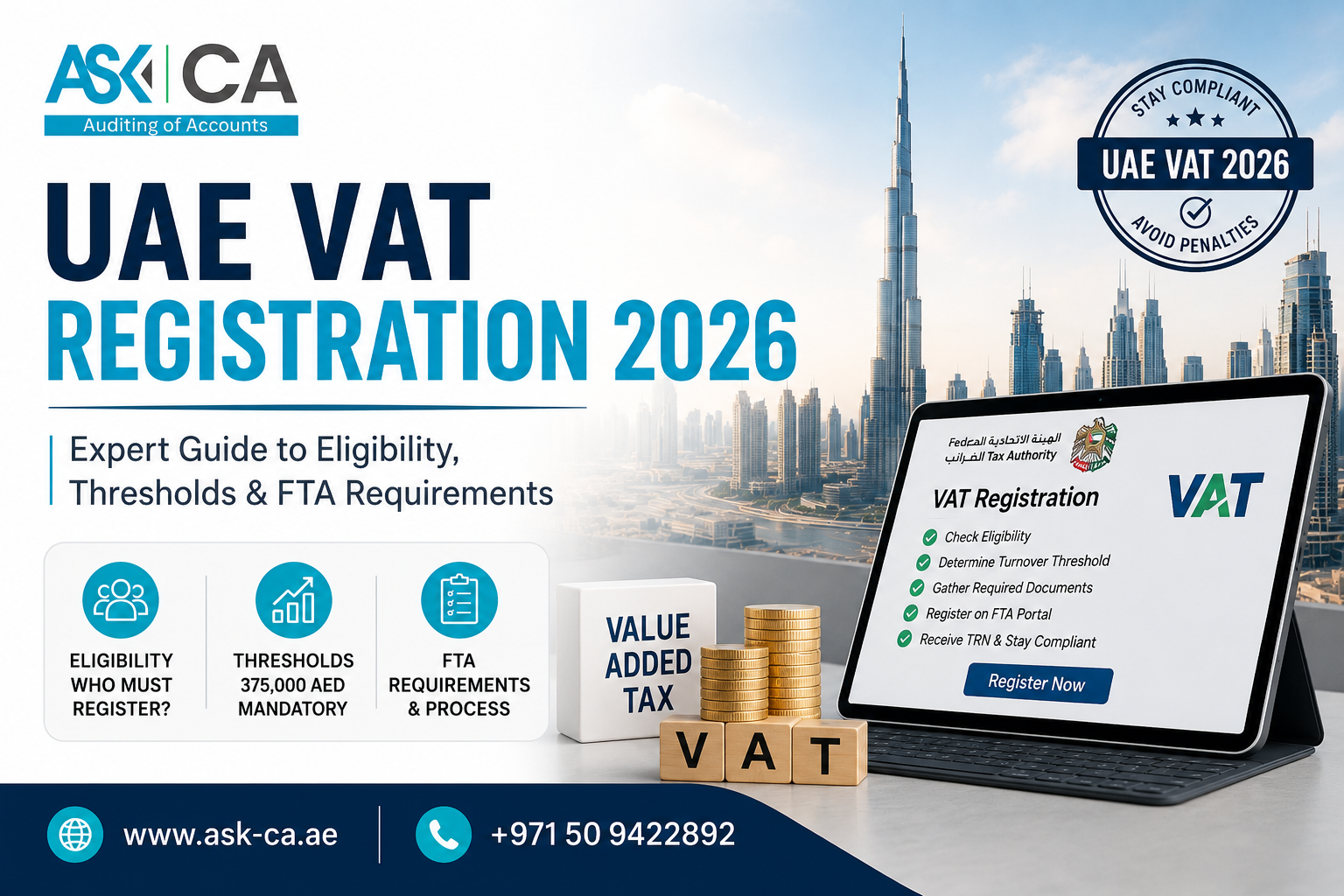
Mandatory registration applies once your taxable supplies and imports exceed AED 375,000 over the previous twelve months, or if you reasonably expect to cross that threshold within the next thirty days. There’s no discretion here. Cross that line and you’re legally required to register, full stop.
Voluntary registration is available once your taxable supplies or expenses exceed AED 187,500. Plenty of smaller businesses and startups choose this route deliberately, because being VAT registered means you can reclaim the input VAT on your own business costs, which can be genuinely worthwhile even before you’re forced into it.
If your turnover sits below AED 187,500, you’re generally not required to register at all, though I’d still recommend keeping an eye on your numbers month to month rather than assuming you’re safely under the line indefinitely.
What Counts as Taxable Turnover
Here’s where a lot of businesses get their calculation wrong. Taxable turnover isn’t just your standard rated sales. It includes standard rated supplies, zero rated supplies, and in certain cases the value of goods and services you’ve imported into the UAE. It does not include exempt supplies, which is a distinction that matters a lot for businesses in sectors like certain financial services or residential real estate.
Getting this calculation wrong in either direction creates problems. Underestimate your turnover and you might miss your mandatory registration deadline without realizing it. Overestimate it and you might register earlier than necessary, taking on compliance obligations before you actually needed to.
The VAT Registration Deadline You Need to Know
Once your taxable supplies cross the AED 375,000 threshold, you’re required to apply for registration within thirty days of becoming liable. Missing this window is one of the most common compliance mistakes I see, usually because a business simply wasn’t tracking its rolling twelve month turnover closely enough to notice they’d crossed the line until well after the fact.
My advice to every client is the same. Review your taxable turnover monthly, not annually. Waiting until year end to check your numbers is exactly how businesses end up filing late and facing avoidable penalties.
Documents You’ll Need for VAT Registration
The FTA requires a fairly standard set of documents, though the exact list can vary slightly depending on your business structure. You’ll typically need your trade license, passport and Emirates ID copies of the owner or authorized signatory, your Memorandum of Association, proof of your business activities, bank account details, and financial records demonstrating your turnover, such as audited financials or management accounts.
For businesses with more complex ownership structures, group registration applications, or multiple trade licenses, additional documentation is usually required, and this is often where the process slows down if it isn’t prepared properly from the start.
How the EmaraTax Registration Process Works
VAT registration in the UAE is handled entirely through EmaraTax, the FTA’s digital platform that replaced the older e-Services portal. The process generally involves creating or accessing your EmaraTax account, completing the VAT registration application with your business and financial details, uploading the required supporting documents, and submitting the application for FTA review.
Once submitted, the FTA reviews your application and may request additional information or clarification before approving it. Processing times vary depending on the completeness of your application and current FTA workload, which is exactly why having your documentation properly prepared upfront makes such a meaningful difference to how smoothly the whole thing goes.
Common Mistakes Businesses Make
A handful of issues come up again and again in my experience. Businesses miscalculating their taxable turnover by including exempt supplies they shouldn’t have counted. Companies waiting until they’re well past the threshold before applying, triggering penalties for late registration. Incomplete documentation causing unnecessary delays in FTA review. And businesses assuming voluntary registration isn’t worth the administrative effort, when in fact reclaiming input VAT often makes it genuinely beneficial even at an early stage.
Common Questions
What happens if I don’t register for VAT when I’m required to?
You’ll face financial penalties for late registration, and you’ll be liable for VAT on supplies made during the period you should have been registered, even if you didn’t charge it to your customers at the time.
Can I register for VAT voluntarily if I’m below the mandatory threshold?
Yes, as long as your taxable supplies or expenses exceed AED 187,500. Many startups choose this route specifically to reclaim input VAT on their setup and operating costs.
How long does VAT registration take through EmaraTax?
Timelines vary depending on how complete your application is and current FTA processing volumes. Applications with all required documentation prepared correctly from the start generally move through review faster.
Do free zone companies need to register for VAT?
In most cases yes, based on the same turnover thresholds that apply to mainland businesses, though certain designated zones have specific treatment for particular transactions worth checking against your exact business activity.
Getting Your VAT Registration Right the First Time
VAT registration doesn’t need to be complicated, but it does need to be handled carefully. Knowing your actual taxable turnover, tracking it consistently, and preparing your documentation properly before you apply through EmaraTax will save you from the penalties and delays that catch so many businesses out.
At ASK CA, we handle VAT registration, input and output reconciliation, and quarterly return submissions for businesses across the UAE, making sure nothing falls through the cracks with the FTA. If you’re unsure whether your business needs to register or you want the process handled properly from the start, get in touch with our team at our Dubai office.