A lot of business owners in the UAE treat VAT return filing as a background task, something the finance person handles quietly every quarter without much thought from anyone else. That’s understandable, but it’s also a bit risky. Getting VAT filing wrong, or simply filing late, carries real financial consequences, and understanding why this process matters so much helps explain why it deserves genuine attention rather than being an afterthought.
Let’s go through what makes VAT return filing so important, and what UAE businesses actually need to keep in mind.
VAT Filing Isn’t Optional Once You’re Registered
Once your business crosses the mandatory VAT registration threshold of AED 375,000 in taxable supplies, filing becomes a firm legal obligation. There’s no grace period based on how busy you are or how complicated your first return feels. The Federal Tax Authority expects accurate, on-time returns from every registered business, regardless of size or industry.
This applies whether your business is mandatorily registered or chose voluntary registration between AED 187,500 and AED 375,000. Once you’re in the system, the same filing obligations apply to you as to any larger company.
Why Timely Filing Genuinely Matters
Filing on time isn’t just about avoiding a fine, though that’s certainly part of it. A business that files consistently and accurately builds a clean compliance record with the FTA, which matters more than people often realize when it comes to future dealings with the authority — whether that’s a routine review, a refund claim, or simply maintaining good standing.
There’s also a practical cash flow angle here. VAT filing forces a business to reconcile its output and input VAT regularly, which naturally keeps a business more aware of its actual financial position. Businesses that treat VAT filing as a genuine quarterly discipline, rather than a last-minute scramble, tend to have a clearer, more current picture of their finances overall.
The Real Cost of Late or Inaccurate Filing
This is where the importance of VAT compliance becomes very concrete very quickly. Late filing triggers administrative penalties from the FTA, and these can escalate the longer a return remains unfiled. Beyond the direct penalty, inaccurate returns can trigger closer scrutiny from the authority, and correcting errors after the fact through voluntary disclosures takes considerably more time and effort than getting the return right the first time.
There’s also a reputational angle for growing businesses.Investors, bankers, and possible collaborators now demand clean compliance track records, and a past of delayed or amended VAT returns can be a concern during due diligence that the enterprise may not want to face.
What Accurate VAT Return Filing Actually Involves
A properly completed VAT return isn’t just a single number submitted to the FTA. It requires accurately calculating your output VAT, the tax collected on your sales, and your input VAT, the tax paid on your business purchases, then correctly reporting the difference. This depends entirely on the quality of your underlying records throughout the tax period, not just the effort put into the return itself at filing time.
Businesses that keep clean, organized records throughout each quarter find filing considerably more straightforward than those trying to reconstruct several months of transactions in the days before a deadline. This is exactly why VAT compliance really starts with good bookkeeping habits, not with the filing process itself.
Common VAT Filing Requirements Businesses Need to Track
A few things matter consistently across every VAT-registered UAE business. Filing periods are typically quarterly, though some businesses file monthly depending on their specific FTA classification, so knowing your exact filing frequency matters. Returns must be submitted through the FTA’s online portal within the specified deadline following the end of each tax period. Any VAT owed must be paid by that same deadline, not simply the return submitted. And proper documentation supporting every figure in the return needs to be retained, since the FTA can request supporting records during a review.
Missing any of these individual pieces, not just the headline filing deadline, can create compliance problems even when a business believes it has filed correctly.
Why Businesses Increasingly Outsource VAT Compliance
Given how much accuracy and consistency actually matters, plenty of UAE businesses have moved toward outsourcing their VAT return filing rather than managing it entirely in-house, particularly smaller businesses without a dedicated finance function. A specialist team brings genuine familiarity with FTA requirements, catches errors before submission rather than after, and keeps up with regulatory changes that a business owner focused on running their actual company might otherwise miss.
This becomes especially valuable as VAT rules continue to be refined and as UAE corporate tax obligations now run alongside VAT compliance, meaning businesses are managing more regulatory complexity simultaneously than they were even a few years ago.
Common Questions
What happens if I file my VAT return late in the UAE? Late filing triggers administrative penalties from the FTA, which can increase the longer the return remains outstanding. Consistent late filing can also draw closer scrutiny to a business’s overall compliance record.
How often do UAE businesses need to file VAT returns? Most businesses file quarterly, though some are assigned monthly filing depending on their specific FTA classification. Your exact filing frequency is confirmed at the time of VAT registration.
Is VAT return filing the same as VAT registration? No.The registration procedure is done only once, when your company becomes part of the VAT system. On the other hand, the process of filing is one in which VAT returns are regularly submitted after registration.
Is there any way to fix mistakes on a submitted VAT return? Certainly, by going through the voluntary disclosure procedure, which will take more time compared to simply submitting the return without errors. It is always preferable to prevent such mistakes in advance.
Can errors on a submitted VAT return be corrected? Yes, through the voluntary disclosure process, though this takes more time and carries more scrutiny than simply filing an accurate return the first time. Prevention through careful preparation is always the better path.
Do small businesses need to take VAT filing as seriously as larger companies? Yes. The same filing obligations and potential penalties apply regardless of business size once a company is VAT registered, whether that registration was mandatory or voluntary.
Making VAT Compliance a Genuine Priority
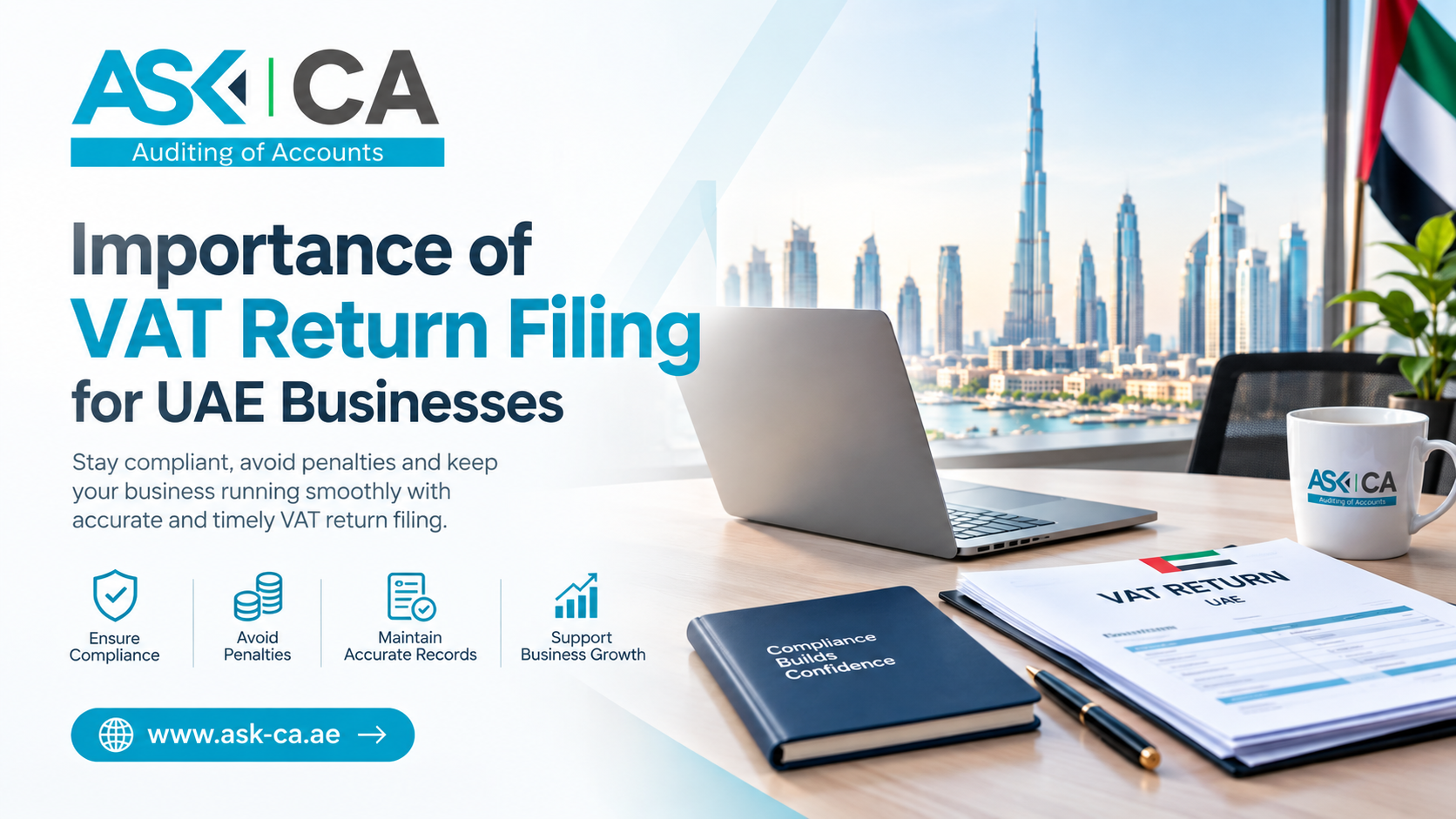
VAT return filing matters for UAE businesses well beyond simply avoiding a penalty. It reflects the overall financial discipline of a business, protects its standing with the FTA, and supports a clearer, more current understanding of its own financial position throughout the year. Businesses that treat this as an ongoing quarterly discipline, backed by clean, consistent records, consistently avoid the stress and cost that late or inaccurate filing creates.
At ask-CA, we help UAE businesses stay genuinely compliant with VAT and corporate tax obligations, from registration through accurate, timely return filing and ongoing advisory support. If your business needs help staying on top of its VAT compliance, get in touch with our team.