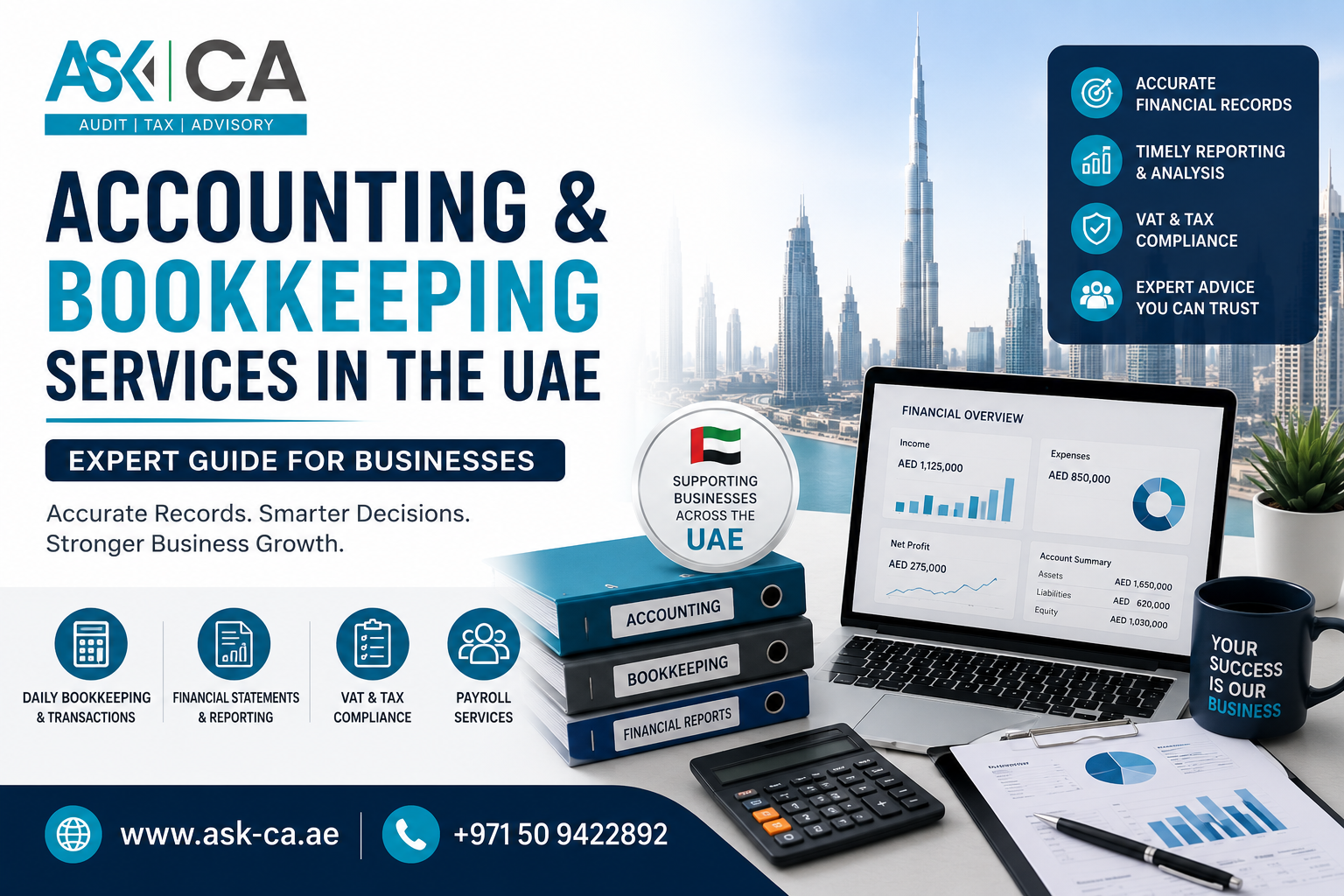
Accounting and Bookkeeping Services in the UAE: Expert Guide for Businesses
If you’ve started a company in the UAE anytime in the last few years, you’ve probably noticed something: the finance side of the business doesn’t stay simple for long. VAT filings, corporate tax registration, WPS payroll rules, free zone audit requirements — it piles up fast, and most owners didn’t get into business to become part-time tax analysts.
That’s the real reason demand for accounting and bookkeeping services in the UAE has grown so much. It’s not that business owners suddenly got lazy about their books. It’s that the compliance landscape got genuinely more complicated, and doing it wrong now carries real financial consequences.
This guide walks through what these services cover, why they’ve become close to essential rather than optional, and what to actually look for when picking a firm.
Why UAE Businesses Can’t Really Wing It Anymore
A few years back, plenty of small businesses in the UAE ran on a simple spreadsheet and a bit of memory. That’s mostly gone now. Corporate tax landed in 2023. VAT enforcement has gotten stricter. Free zone companies are being asked harder questions about economic substance and what actually counts as qualifying income.
None of that makes running a UAE business harder in some abstract sense — but it does mean the margin for error has shrunk. A missed filing date or a miscategorized expense isn’t just an inconvenience anymore; it’s a fine, and sometimes a bigger headache than the money itself.
A good accounting partner handles more than data entry. In practice, they’re the ones who:
- Keep you on the right side of FTA (Federal Tax Authority) deadlines
- Catch small errors before they turn into penalties
- Give you an honest read on cash flow, not just a bank balance
- Put together financial statements that actually hold up with investors or banks
- Help you make calls based on real numbers instead of gut feeling
None of this is glamorous work. But it’s the difference between knowing where your business stands and finding out the hard way.
Accounting vs. Bookkeeping: They’re Not the Same Thing
People throw these two terms around like they mean the same thing. They don’t, and it’s worth knowing the difference before you hire anyone.
Bookkeeping is the daily grind — logging invoices, tracking receipts, reconciling bank statements, recording payroll entries. It’s unglamorous, but it’s the foundation everything else sits on. Get this wrong and nothing built on top of it means much.
Accounting is what happens with that raw data afterward. It’s turning a pile of transactions into financial statements, tax filings, budgets, and forecasts you can actually use to make decisions.
Most established accounting firms in the UAE bundle both together, and honestly, that’s the better arrangement. When bookkeeping and accounting sit with two different providers who aren’t talking to each other, things fall through the cracks — usually the expensive kind.
What’s Actually Included When You Hire an Accounting Firm in the UAE
Not every provider offers the same scope, so it helps to know what a genuinely full-service firm should cover.
Bookkeeping and financial record management. This is the daily transaction recording, bank reconciliations, accounts payable and receivable tracking, and general ledger upkeep. Unexciting, but it’s where everything starts.
VAT registration and filing. The UAE runs a 5% VAT system, and depending on your turnover, you’re filing monthly or quarterly. A capable bookkeeping company in the UAE handles registration, prepares the returns, and deals with FTA correspondence directly, so you’re not the one chasing deadlines.
Corporate tax compliance. Since corporate tax came into effect, any business above the exemption threshold has to register, work out taxable income correctly, and file annually. This is honestly one of the areas where outsourced accounting services in Dubai earn their fee — the rules are still fairly new, and interpretations are still being refined.
Financial reporting. Monthly or quarterly profit-and-loss statements, balance sheets, cash flow reports. Not just paperwork — this is what tells you whether the business is actually healthy, and it’s non-negotiable if you’re trying to raise financing.
Payroll processing. Salary runs, WPS (Wage Protection System) compliance, end-of-service benefit calculations. Small mistakes here get expensive quickly, both financially and in terms of employee trust.
Audit support. A lot of UAE free zones and mainland setups require annual audits. Firms that already know your specific free zone will keep your books ready year-round instead of scrambling the week before deadline.
Advisory and planning. The better firms go beyond just staying compliant — budgeting help, cost analysis, and growth planning that actually uses your financial data instead of just filing it away.
Why So Much of This Activity Centers Around Dubai
Dubai has ended up as the real hub for accounting and bookkeeping services in the UAE, and it’s mostly a numbers game — there’s just a huge concentration of businesses spread across free zones like DMCC, JAFZA, and DIFC, plus a large mainland business scene. Every one of those jurisdictions has its own quirks in compliance requirements, so firms operating out of Dubai tend to build up deeper, more current experience simply from handling more variety.
If you’re looking for an accounting firm in Dubai specifically, try to find one that’s already worked with businesses in your exact free zone. The learning curve difference between a firm that knows your jurisdiction cold and one that’s guessing is bigger than people expect.
Is Outsourcing Actually Worth It?
Cost is usually the first reason people consider outsourcing, and yes, it’s cheaper than building an in-house finance team from scratch — no salaries, no benefits, no software licensing to manage on your own. But that’s not really the main advantage once you dig into it.
The bigger value is access to expertise you’d otherwise have to hire for directly. A dedicated firm is watching FTA updates and regulatory shifts as their full-time job, which means you’re not the one trying to interpret a new tax circular at 11pm. It also means fewer errors slipping through, since someone with actual experience is reviewing the numbers rather than whoever in your office happened to have time that week.
And then there’s the time factor, which owners tend to underestimate until they get it back. Every hour spent reconciling invoices is an hour not spent on the parts of the business that actually grow revenue. Outsourced setups also scale with you — when the business grows, the service grows with it, without the months-long lag of hiring and training an internal team.
What to Actually Check Before You Sign With a Firm
The cheapest option on the list usually isn’t the best one, and picking based on price alone tends to backfire. A few things genuinely worth checking first:
UAE-specific experience. Don’t be shy about asking how many clients they currently handle in your exact free zone, or on the mainland if that’s your setup. A generic answer here is a red flag.
Software they actually use. Make sure they work comfortably with whatever you’re already using, or can recommend something like Zoho Books, QuickBooks, or Xero that’s set up properly for UAE tax rules.
Pricing you can predict. Fixed monthly packages are almost always easier to plan around than hourly billing that can quietly balloon.
How they communicate. You want someone who explains things in plain language, not a firm that buries every answer in jargon and makes you feel behind.
Actual track record. Ask for references, or at least examples of audits and FTA filings they’ve handled for businesses similar to yours.
Where This Leaves You
Accounting and bookkeeping services in the UAE aren’t just about keeping the books tidy anymore. Between VAT, corporate tax, and the jurisdiction-specific rules that come with free zones, professional support has shifted from “nice to have” to something close to a basic requirement for staying compliant.
Whether you’re running a startup out of a Dubai free zone or you’ve got an established mainland operation, the right accounting partner takes one major source of stress off your plate — and gives you numbers you can actually trust when it’s time to make a decision.